

COWNOSE RAYS IN STINGRAY BAY
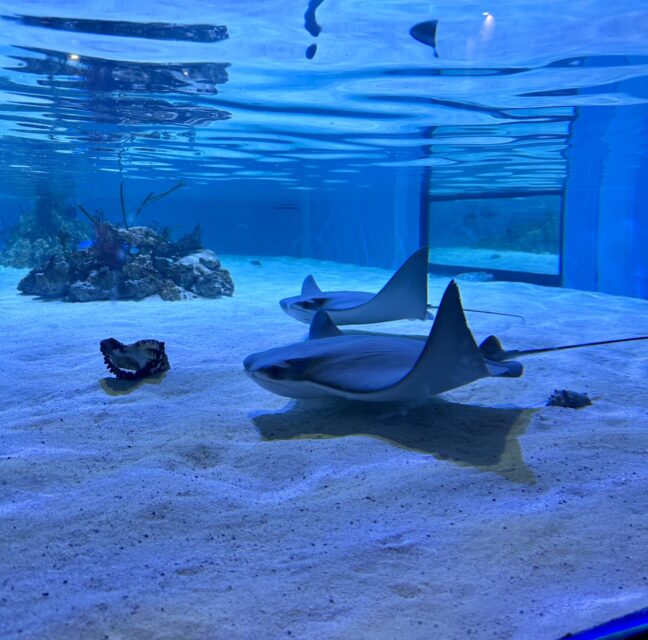
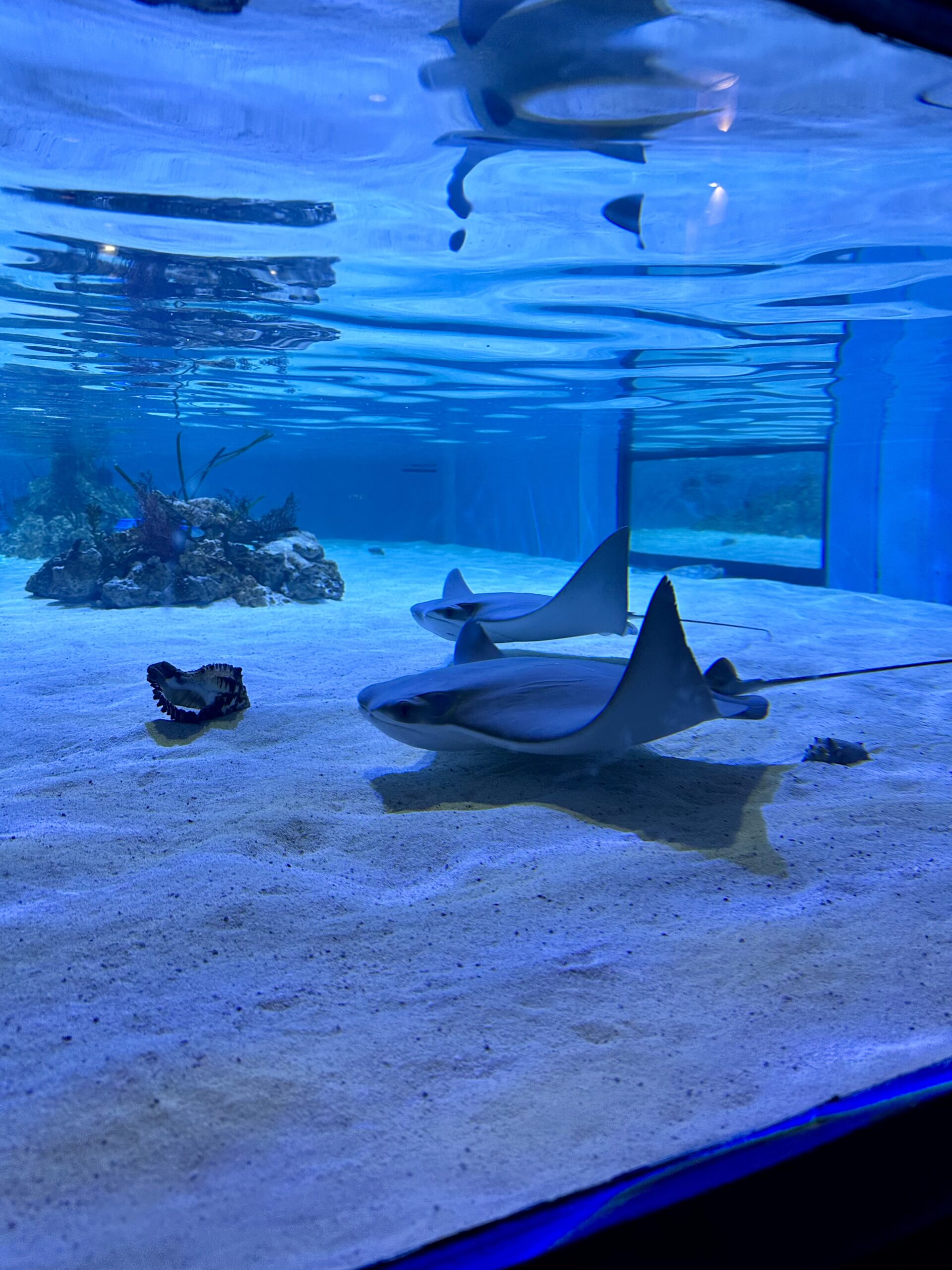
Peaceful, in their natural beauty and gracefulness, Cownose Rays glide through the swirling, flowing water, gently undulating, winging first to the right, now to the left circling round, gently floating, hovering above the sandy bottom, rising to the surface, flapping their wings and splishing the surface, now splashing salty droplets upward and now they splatter outward, sprinkling down on the water, while plunging below its surface, gliding, they invite us to watch endlessly this elegant artistry, this water ballet, this enchanting, stunningly exquisite, swim.
And again, to the right, now the left, and a tender, soft sprinkle of rain on the water’s surface with a floating and fluttering and then a flittering of wings below and now above in a sputtering spray and away and around the rays glide through the swirling water to return again and once again and again.
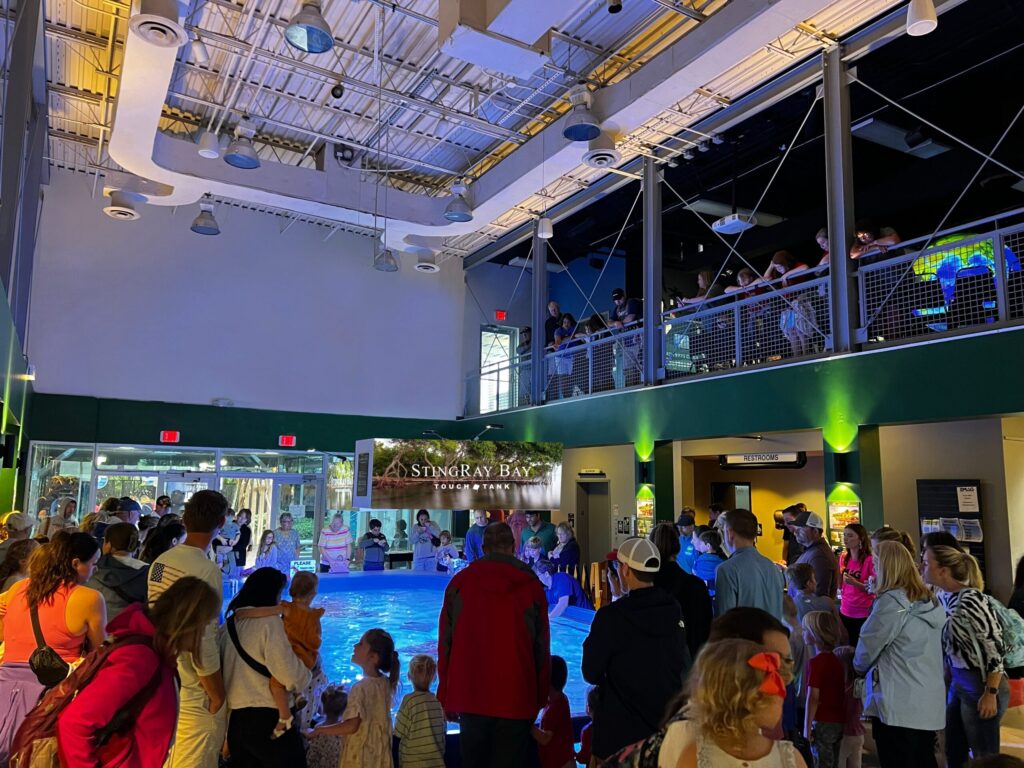
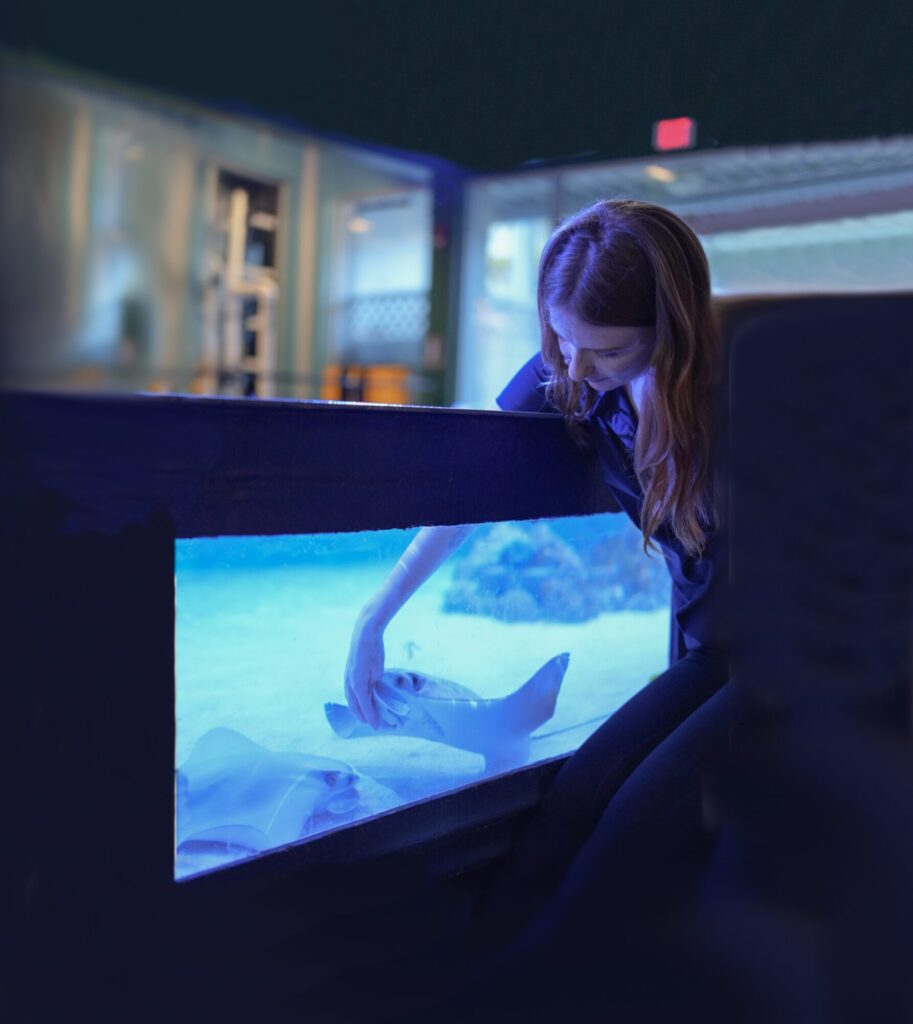
The IMAG History and Science Center invites you to come and see these mesmerizing performances at the StingRay Bay Touch Tank where Cownose Rays and other species of marine life are on display. Cownose rays are named for the distinctive shape of their foreheads and noses which have two lobes resembling the nostrils of cows. Like a tidal pool that forms along the coast, StingRay Bay Touch Tank is a peaceful, shallow saltwater pool, an interactive aquarium, an enthralling, if not hypnotizing, exhibit where visitors can enjoy a fun, safe, hands-on experience with stingrays, horseshoe crabs, fish, and other marine life.
Stingrays, in their natural environments, can be dangerous causing immediate, severe pain, usually from stepping on them in shallow water. Not safe and certainly not fun: their stinging barb can inflict a puncture wound that delivers venom which can cause severe swelling, bleeding, and systemic symptoms like nausea.
At the IMAG, we put the fun and safe back into stingray experiences. IMAG trims the barbs of our stingrays (like trimming a fingernail, it doesn’t hurt the rays) to ensure an enjoyable, safe, fun, hands-on experience for our guests. Besides fostering a connection to coastal ecosystems and the ocean, StingRay Bay Touch Tank provides unique educational opportunities to learn about stingrays and to feed and feel them. People are invited to rinse their hands in water only, without using soap, and to use two fingers only, their index and middle fingers, to gently touch the wings of the stingrays, to feel their soft, supple skin, as they glide by gracefully. Helping ensure our stingrays are kept safe from injury, we encourage guests to avoid touching their backs, heads, or other body parts. Please, just touch their wings. After our guests touch the rays, we encourage them to wash their hands with soap and water and to rinse them thoroughly. It’s always a good and healthy practice to wash your hands, especially after touching fish.
Besides touching the rays, guests can also feed them. That’s right. Our Cownose Rays enjoy being pampered and fed twice daily. Who among us doesn’t enjoy being cared for and well fed? Their mouth-watering menu is delectable; it includes succulent shrimp, luscious scallops, yummy squid, delicious softshell crabs, and juicy capelin, small fish belonging to the smelt family. While some IMAG guests are voracious seafood lovers, by their own admission, we kindly ask those who are feeding the rays to not partake. Please, just feed the stingrays, Thank you for your self-control and attention to this matter.
So well fed and pampered, you might ask how wonderful is life as an IMAG Cownose Ray living in StingRay Bay? Let’s begin by telling you what Rhinoptera bonasus (the scientific name for the Cownose Ray) prefers. First, they are partial to shallow coastal waters over sandy or silty bottoms (StingRay Bay has a sandy bottom, check). They prefer saltwater (or brackish water) with temperatures between 70 °F and 78 °F (StingRay Bay saltwater temperature is well regulated, oxygenated, filtered, clean, and flowing wonderfully, check), And, third, they prefer a lovely diet of small fish and small invertebrates like shrimp, scallops, squid, and clams (StingRay Bay menu ensures a fine, five-star dining experience for all, check).
Speaking of a five-star experience, be sure to visit our special No Bone Zone Invertebrate Tanks, next to the StingRay Bay Touch Tank, which feature sea stars, crabs, shrimp, sea urchins, and other lovely, dare I say delectable, creatures. Obviously, we keep these tanks separate from the Touch Tank since the Cownose Rays consider some of these tasty invertebrates as breakfast bites or dinner entrees. And while you are at it, you will also want to visit The Magnificent Mangroves of SWFL Exhibit which surrounds the StingRay Bay Touch Tank (to learn about these amazing coastal forests) and don’t forget to stop by the StingRay Bay Donor Wall.
During their visit with the stingrays, many guests often contribute to the care and welfare of the Cownose Rays and our other animal ambassadors in the aquarium to include their feeding (yes, offering a most delectable menu), veterinary care, and the maintenance of the tank, filtration, and life support systems. As a Friend of StingRay Bay, we, at the IMAG, personalize a stingray plaque, in your honor, with your name or the name of a loved one, we display it on the StingRay Bay Donor Wall of Recognition, and we gift you a special keepsake with our appreciation and gratitude.
THE UNDERWATER WINDOW
Oh, one last thing. When you visit the StingRay Bay Touch Tank and those wonderful Cownose Rays, you might want to consider bringing a raincoat and an umbrella, or perhaps a towel and a complete change of clothes, as the rays are often noted for splishing and splashing about the tank in their excitement to see you, to be touched and fed. In actuality, you might get a slight sprinkle splash but don’t worry. We got plenty of paper towels for you to dry off after your fun.
The IMAG History & Science Center is located at 2000 Cranford Avenue, Fort Myers, FL 33916. For more information, 239-243-0043 or theIMAG.org. The IMAG is open Monday through Saturday from 10:00 AM to 5:00 PM, Sunday from 12:00 PM to 5:00 PM, and closed Tuesday.
Photo Credits: IMAG History & Science Center
Love what you're reading?
Get the best of Fort Myers delivered to your inbox every month — local stories, events, and good news worth sharing.
Subscribe for Free