Personally, I’ve always hated the notion of beauty pageants. Please, don’t get me wrong. Who doesn’t love beauty? But the thought of a competition intended to assess and rank the physical attractiveness, elegance, loveliness, and beauty of humans is a bit absurd. The beauty pageant determines which contestant is the most beautiful and which contestant is most beautiful but not quite that beautiful, the “runner-up,” so to speak. And it determines which contestant is also most beautiful but not quite a runner-up but a runner-up to the runner-up and which contestant is also most beautiful but not quite a runner-up to the runner-up to the runner-up and so it goes. The pageant concludes with a hollow consolation that all participants are beautiful, some more than others.
Public opinions on beauty pageants are deeply divided. While beauty pageants traditionally focus on judging the physical attractiveness, the outer beauty, of contestants, most modern pageants have since expanded their judging criteria to also assess the inner beauty of contestants; that is to say, contestants’ individual characteristics and traits like their aptitude and intelligence, personality and moral character. Some judging criteria might also include evaluations of contestants’ compassion, caring, and charity for others.
Forget that! While I detest the idea of beauty competitions, there is one pageant, in particular, I love because it is all and only about outer beauty. Call me a hypocrite. Call me a phony, a fake, an imposter. Forget that nonsense about inner beauty. I absolutely love this pageant, a pageant of and about beauty and beauty only. And, by the way, this pageant has got nothing to do with aptitude and intelligence. Brains account for nothing in this contest. Just good looks. What’s more, this pageant has got nothing to do with personality or moral character. Just physical attractiveness, elegance, loveliness, and beauty.
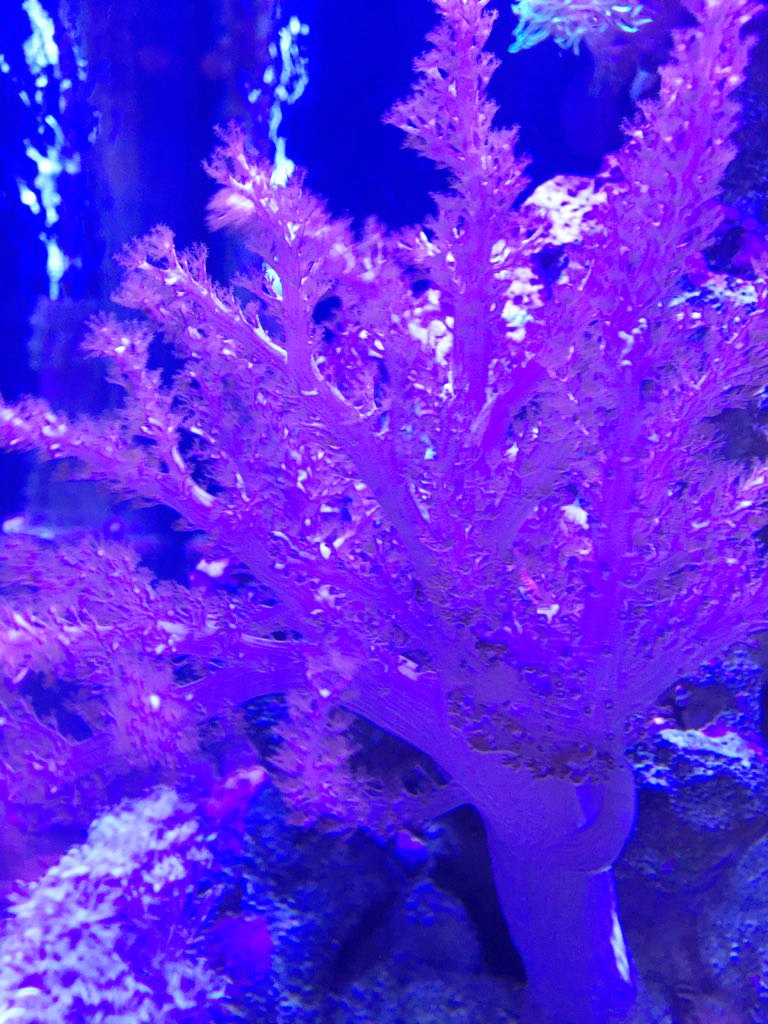
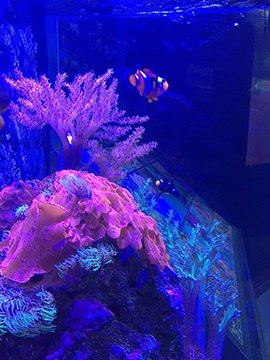
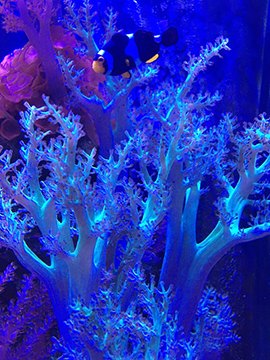
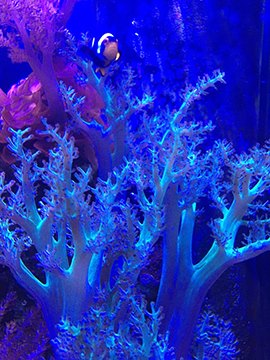
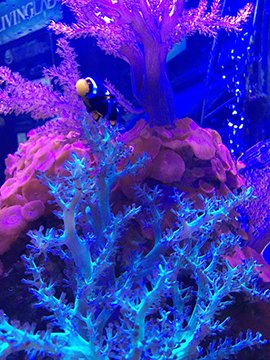
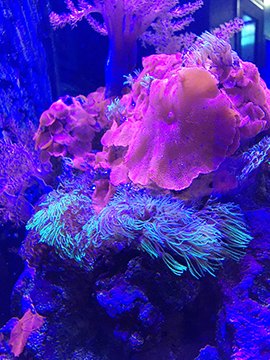
Before I explain, allow me to introduce you to some of our most beautiful contestants. There are Ricordea Yuma, Porites Cyclindrica, and Halomitra Pileus. Each contestant is exquisite and lovely in her own way. And there are Euphillia Glabrescens, Athelia Glauca, Pectinia Alcicornis, and Acropora Dendrum. Gorgeous, each are unquestionably ravishing and gorgeous. And I would be remiss if I didn’t also mention Galaxea Fascicularis, she’s breathtaking. And, oh, I shouldn’t forget Catalaphyllia Jardinei. Flawlessly stunning. With their exotic names (sounding very scientific, if you ask me), these beautiful contestants are competing to be named the most beautiful. But frankly, no judge can judge one over another. They are indeed the most beautiful, each in their own elegance. There are no runners-up in this pageant of pulchritude. All winners.
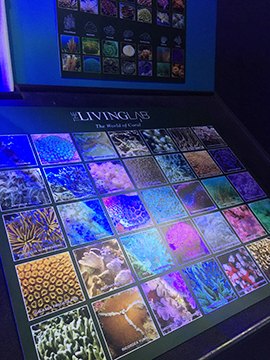
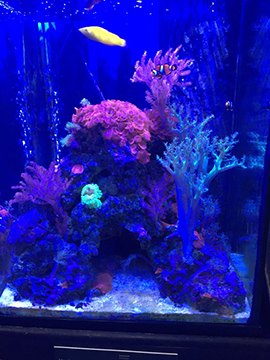
I am talking about a beauty pageant that can be enjoyed every day at The Living Lab in the IMAG History & Science Center, a pageant of sea coral in dazzling, radiant, vibrant colors, in unique and wonderful shapes and sizes. There is this amazing aquarium of coral you just have got to see! There are hard corals called Hexacorallia and soft corals called Octocorallia. And there are, of course, some fish swimming in and about the coral formations. What’s more, there are displays presenting information about coral, beautiful photographs of various types of coral (the aforementioned beauty pageant contestants), illustrations of coral structures, and other fascinating facts about these exquisite underwater creations so elegant and graceful.
Related to jellyfish and sea anemones, corals are groups of tiny invertebrate animals called polyps. They are sac-like, soft-bodied organisms with stinging tentacles positioned around a central mouth to stun and catch passing prey. Belonging to the phylum Cnidaria, polyps live fixed in one place connecting with thousands of other individual, identical polyps forming massive, multi-shaped colonies. Together, polyps share nutrients and communicate within the colony. And instead of having a brain, polyps rely on a basic nerve net that allows them to act or react as a coral colony to light, touch, and danger without a command center. You might think corals do indeed have brains because some colonies even look like brains with their grooved, wrinkled, and intricate surfaces. However, brains and central nervous systems are absent and thus meaningless in this beauty pageant of coral.
Let’s talk a moment about hard and soft coral. Corals are classified into two categories. Called Hexacorallia, hard coral is formed when colonies secrete calcium carbonate. They create rocky skeletons and stony structures or reefs. There are four main reef types based on their shape, their relation to coastlines, water depths, and geological oceanography. Barrier reefs are coral formations that run parallel to coastlines and are separated by deep bodies of water whereas fringe reefs, the most common reefs, grow directly from island and mainland shores. While atolls are circular-shaped coral formations surrounding bodies of water like lagoons, isolated reefs, or patch reefs, are simply coral formations separate from other major reef systems. Usually, they grow in shallow waters between larger barrier reefs or fringe reefs and on continental shelfs and island platforms.
Hard coral colonies are classified by their structures, shapes, and sizes. There are those Hexacorallia who flaunt their columns, branches, arms, and fingers. After all, this is a beauty pageant. And there are hard corals who brandish their petals and flat surfaces, oh my, and hard corals who boast their massive, solitary, encrusted, and brain-like heft. In contrast, soft coral are these gorgeously supple, cushiony creations that sway softly in the sea. They are classified like hard coral by their structures, shapes, and sizes. There are those Octocorallia who flourish their undulating grassy and feathery slender figures. And there are soft corals who showcase their velvety plants and fluctuating flowers and there are those other soft corals, stealing the show, who boast their branchy, supple, and pliable bush-like and tree-like formations. Hexacorallia or Octocorallia, hard or soft, they’re all the most beautiful of creatures.
In addition to their vital food sharing partnership, coral colonies rely on a partnership with microscopic photosynthetic algae called zooxanthellae (zow-uh-zan-theh’-lai). Say that five times fast. Inside coral tissue, the algae provides up to ninety percent of energy for corals. But this photosynthetic algae provides much more. It gives corals their beauty, their attractive, lovely, and vibrant colors. And while the zooxanthellae give corals their energy, pigment, and radiance, pollution and elevated water temperatures (extreme ocean heat stress) can shock corals and cause them to expel their photosynthetic algae, losing their source of energy, eliminating their colors, and turning them alabaster white. Without zooxanthellae, coral tissue becomes transparent revealing its bright white, calcium carbonate skeleton underneath. This condition, called coral bleaching, distresses coral. Because coral is a living organism, coral can die if these stressful conditions continue.
In addition to concerns for pollution, high temperatures, and coral bleaching, damaging and removing coral from its natural environment is also a serious concern. Removing coral from water kills the organism. It dies a quick death. Coral polyps suffocate, starve, and dry out. Its photosynthetic algae is expelled and what remains is the organism’s parched, brittle, calcium carbonate skeleton. In the United States and especially in Florida, damaging and removing coral is illegal and subject to heavy fines.
And yet, touching coral is not illegal. However, touching coral can produce adverse effects on the coral and damage it as well. Coral has a thin outer layer of mucus secretion that functions as an immune system. Touching the surface of coral can inadvertently remove this protective layer exposing the polyps to infection and deadly bacteria. Touching coral can also create adverse conditions of toxicity from the oils and sweat on your hands and even traces of sunscreen or hand lotion. Touching coral likely causes a chemical stress that results in coral bleaching followed by death. As with all beauty pageants, it is always best to admire beauty (whether contestants or corals), but do not touch!
Coral depends on precise water conditions, sunlight, nourishment, temperature, and microscopic algae to survive. It is a living organism that requires our protection. Moreover, fish, crabs, shrimp, sea turtles, stingrays, sharks, and other marine life depend on coral for their survival because coral reefs provide them their habitats and sources for food and nourishment, shelter and safety, breeding and nurseries. Come visit the coral aquarium at The Living Lab. Enjoy the beauty pageant. And then ask yourself: “Can any judge truly judge one’s beauty over another’s beauty especially when it comes to polyps, zooxanthellae, and corals?” Behold! Are they all not the most beautiful in this pageant?
The IMAG History & Science Center is located at 2000 Cranford Avenue, Fort Myers, Fl 33916. For more information, 239-243-0043 or theIMAG.org. The IMAG is open Monday through Saturday from 10:00 AM to 5:00 PM, Sunday from 12:00 PM to 5:00 PM, and closed Tuesday.
Photo Credits: IMAG
Love what you're reading?
Get the best of Fort Myers delivered to your inbox every month — local stories, events, and good news worth sharing.
Subscribe for Free