
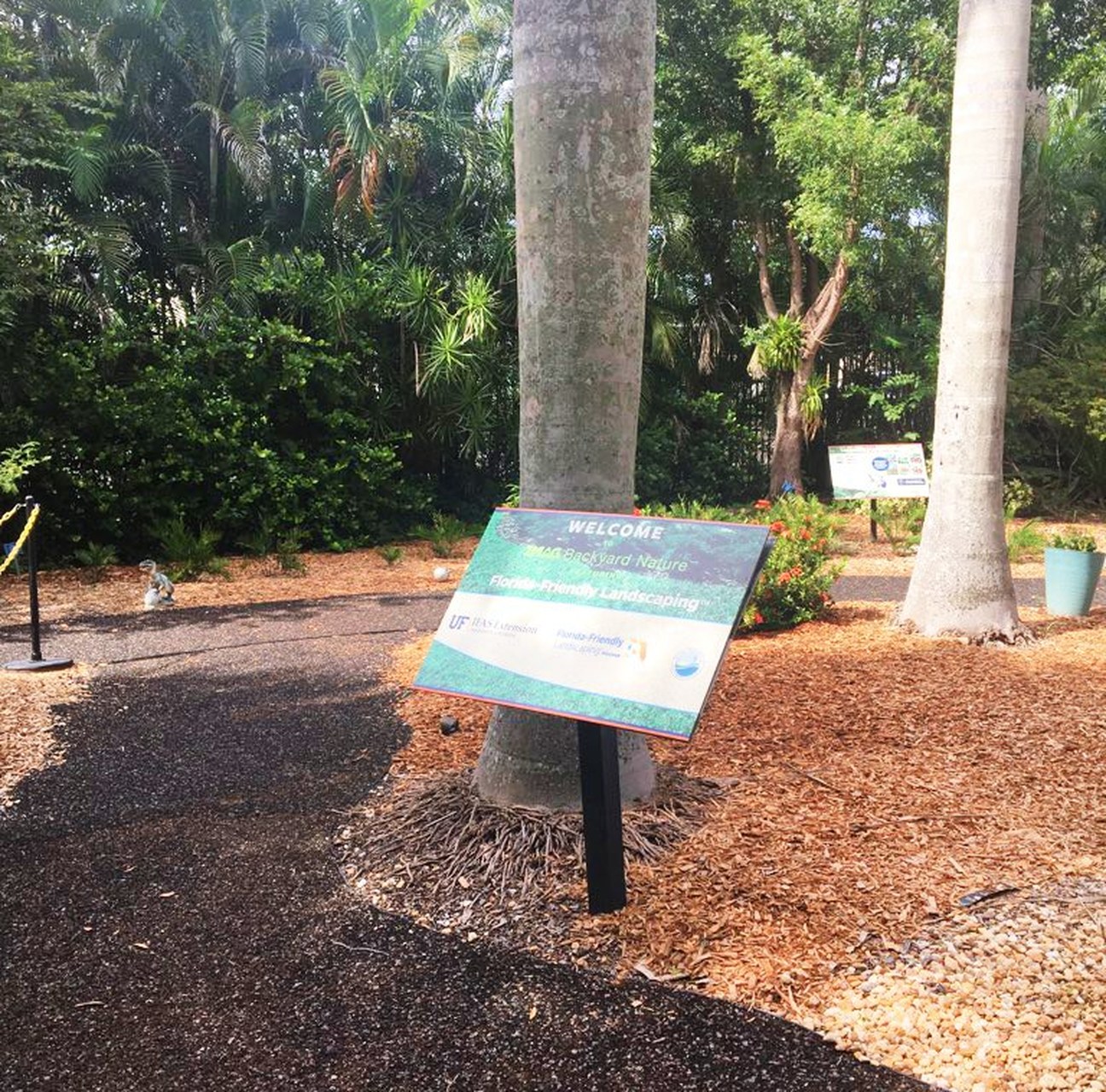
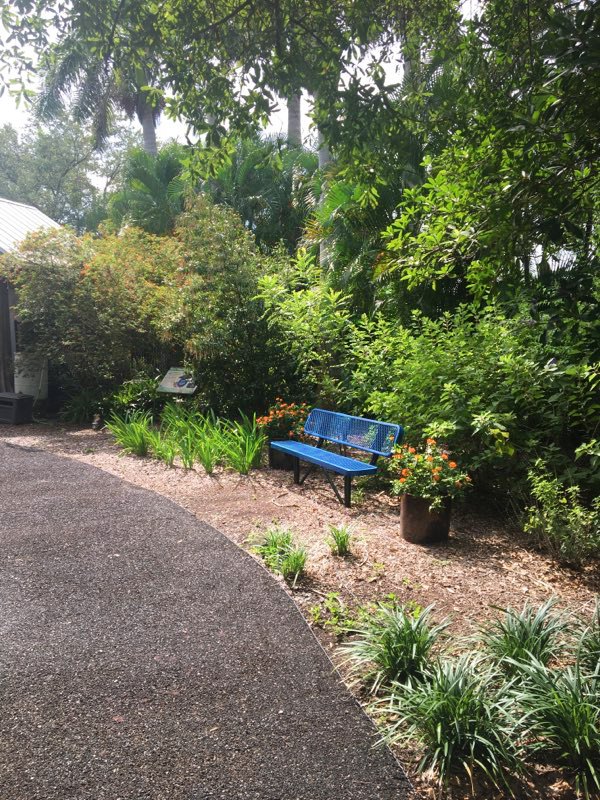
Let’s take a lovely, leisurely walk through IMAG Backyard Nature. Located on the campus of the IMAG History & Science Center is a marvelous, serene Backyard Garden appointed with Florida plants, a walking path, gnome-like garden dinosaurs, and quiet benches to sit, relax, and enjoy the sights and sounds of a Florida landscape. The Backyard Garden is nurtured and managed by certified volunteers of the Master Gardeners Program of the University of Florida. What makes the Backyard Nature special is that it is also a learning center for how you can create wonderful Florida gardens by planting the right plants in the right places, watering, mulching, fertilizing, recycling, attracting wildlife, and managing garden pests.
The IMAG Backyard Nature features the Florida-Friendly Landscaping™ Program. The program is the state of Florida’s premier Extension program that promotes sustainable alternatives to conventional landscaping providing guidance on low-impact, environmentally friendly, science-based landscape practices that use less water and reduce pollutant loading to Florida waters.
Florida friendly landscapes protect Florida’s natural resources. They conserve water, create wildlife habitats, reduce pollution and waste, and prevent erosion. All landscapes in Florida can be Florida friendly if designed and cared for according to the nine principles of Florida-Friendly Landscaping™. The principles are presented as “information centers” arranged along the walking path.
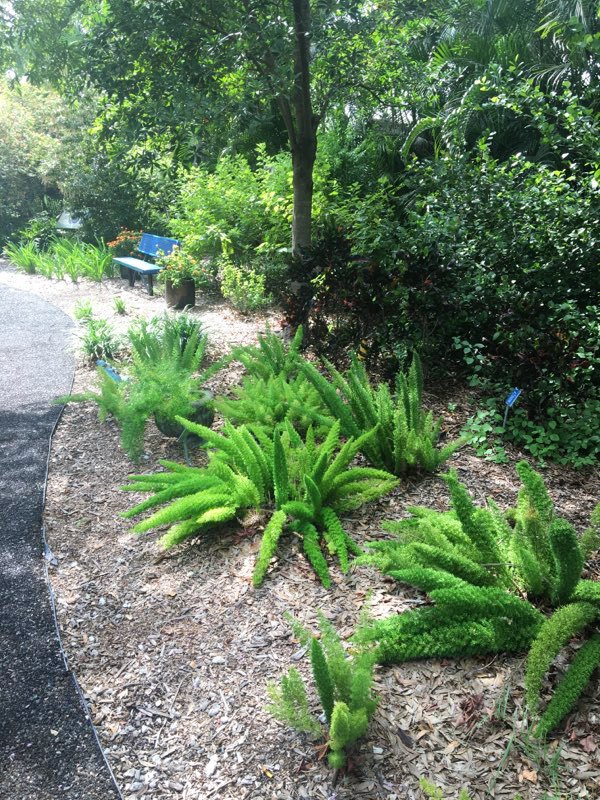
Let’s take a walk. The first Florida-Friendly Landscaping™ Principle we encounter is titled “Location, Location, Location” recommending we plant the right plants in the right places. After developing a landscape plan and before installing plants, remove invasive and problem plants Always choose Florida native plants. Use plants that match the site’s soil, light, water, and climate conditions and group them with similar needs. Plants suited to their site need less irrigation and less fertilizer and are more pest resistant.
From “Location, Location, Location,” we come to the second principle, “Water, Water Everywhere… or Not.” This Florida-Friendly Landscaping™ Principle recommends you water efficiently choosing the right watering method for the right plants in the right places such as micro-watering, drip-watering, and low volume sprinklers. Group plants according to their watering needs and water only as needed early in the morning.
The third principle is called “Feed the Soil.” Because all plants need nutrients to grow, it is recommended we fertilize appropriately. First, test the soil and use only organic or slow-release fertilizer. Use plants that require little or no fertilizer and be sure to avoid fertilizing before a heavy rain. Avoid “weed and feed” products, at all costs, that contain high-powered chemicals that can damage plants and lawn. Instead, use food scraps (not meat, milk, or cheese) and yard waste to make compost.
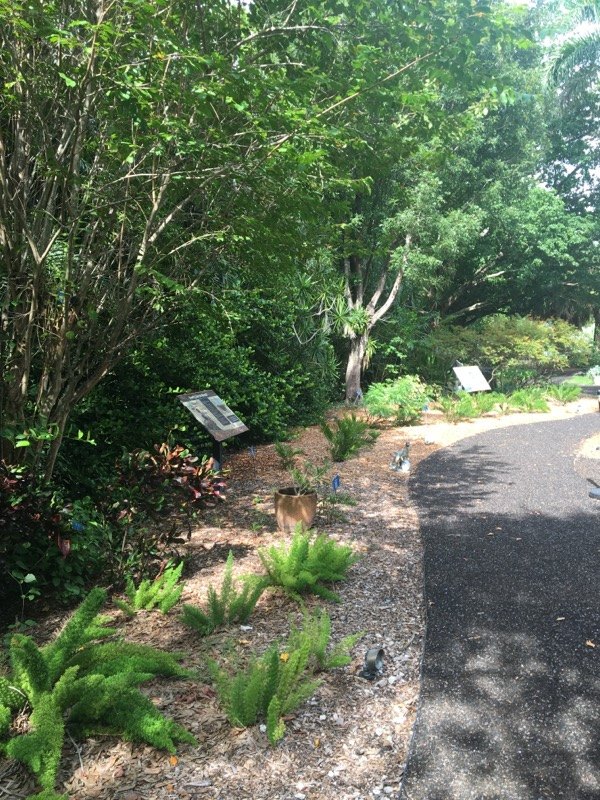
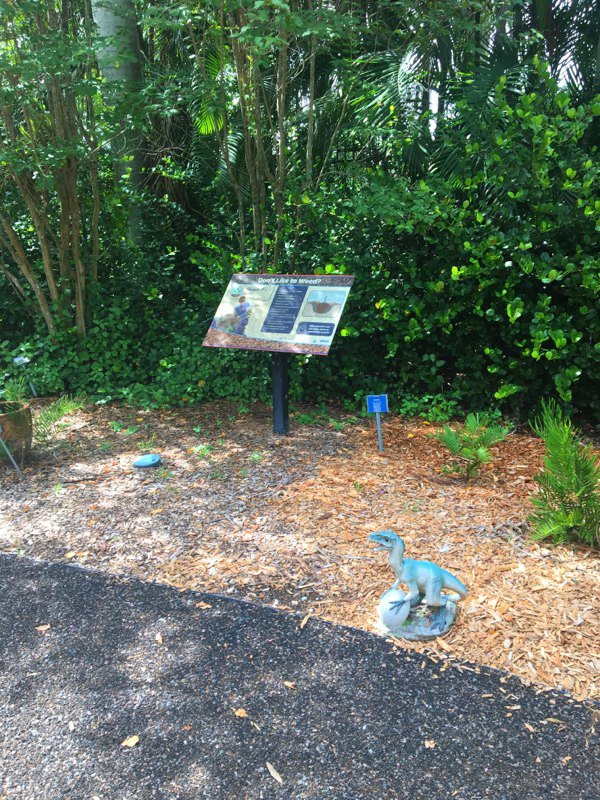
From feeding to weeding, the fourth principle is “Don’t Like to Weed?” This Florida-Friendly Landscaping™ Principle recommends mulching. Mulch retains soil moisture, improves soil fertility, prevents erosion, moderates soil temperatures, and best of all, it suppresses weeds. Use leaves, wood chips, or pine needles to maintain a two-to-three-inch layer of mulch on landscape beds and trees. Be sure, however, to pull mulch away from plants and tree trunks.
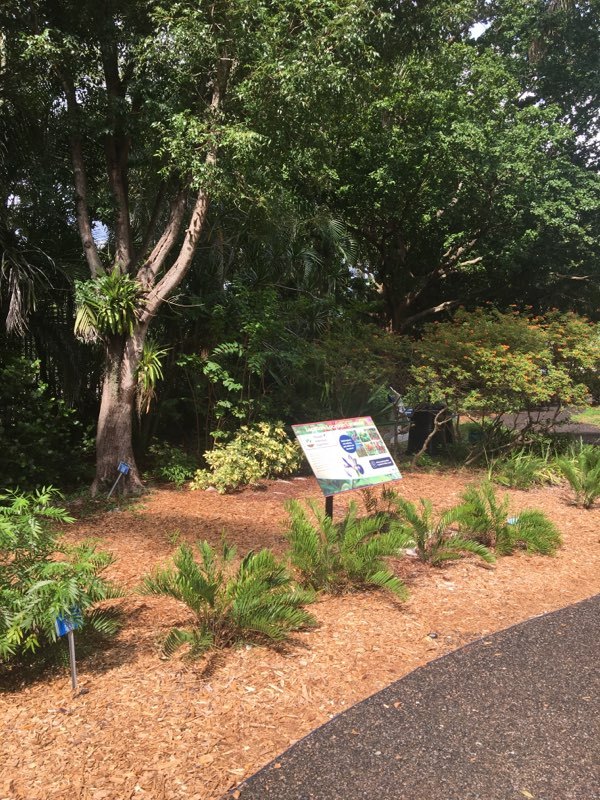
One of my favorite Florida-Friendly Landscaping™ Principles is the fifth one called “Birds, Bees, and Beasts.” This principle encourages us to attract wildlife to our landscapes. After all, birds, insects, and animals need shelter, food, and water too. Gardens, plants, bushes, vines, and trees provide wildlife shelter and places for nesting. Gardens and plants with seeds, flowers, and fruits also provide food and pollen. In addition, you can attract wildlife by providing water in the landscape with a birdbath or a small pond and by providing other animal shelters with bird and bat houses.
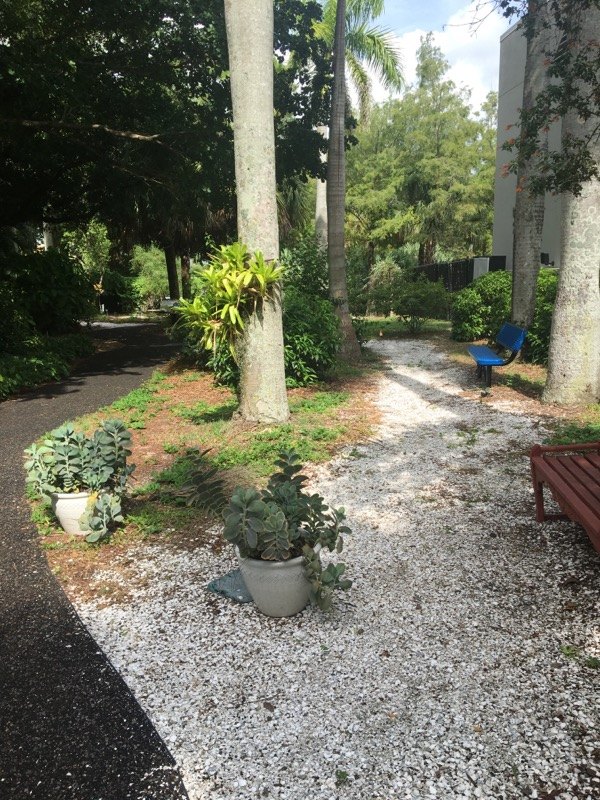
Attracting wildlife to Florida friendly landscapes means we will also be attracting some pests. Manage your backyard pests responsibly by following the sixth principle, “Good, Better, Best… Controlling Pests.” Did you know that ninety-nine percent of insects are beneficial. Check plants regularly and identify beneficial insects to avoid pest problems. If needed, use non-chemical approaches to pest control with environmentally friendly pesticides. Spot treat areas only to avoid over treating. And don’t forget to apply during the cooler part of the day.
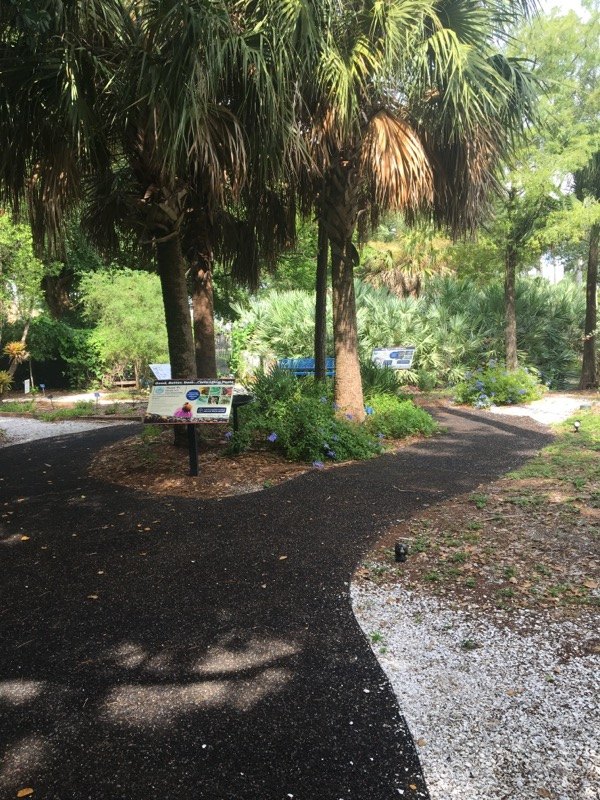
“Chop and Drop,” the seventh principle, is all about recycling yard waste. Here, the Florida-Friendly Landscaping™ Principle recommends we reuse yard waste to enrich soil and save money. Leaves, pine needles, and grass clippings feed the soil with nitrogen. Food scraps (not meat, milk, or cheese) can be mixed with clippings to make compost and feed plants.
“Only Rain Down the Drain, the eighth principle, is all about reducing stormwater runoff and keeping our water clean and healthy. This principle recommends we select plants that filter stormwater, create a rain garden, collect rainwater in barrels, and aim downspouts into gardens. Trash, car grease, pesticides, and an abundance of fertilizer pollute the ground. Stormwater drives this pollution into rivers, canals, and waterways.
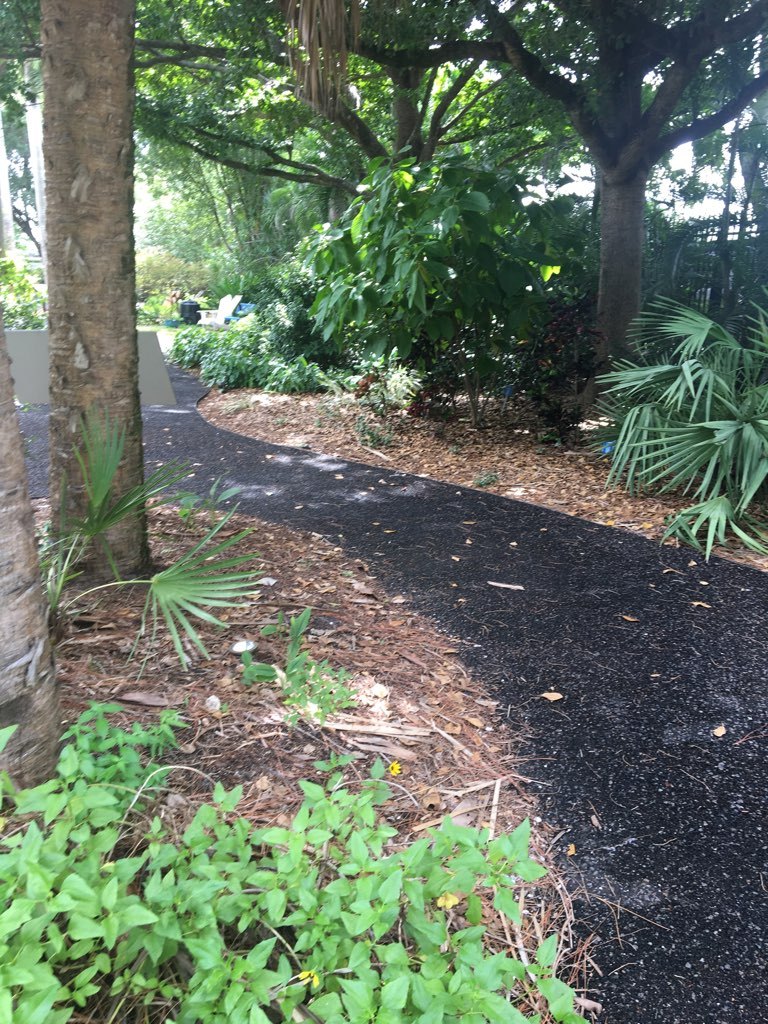
And lastly, the nineth Florida-Friendly Landscaping™ Principle is “Clean Water, Healthy Habitat” urging us to protect the waterfront. Florida boasts over 10,000 miles of rivers and streams, about 7,800 lakes, more than 700 freshwater springs, and the second longest coastline in the United States. As such, it is recommended that we do not mow, fertilize, or use pesticides near the waterfront. We are encouraged to plant native aquatic plants there and to remove invasive and exotic aquatic plants. Replace these plants with Florida native plants to attract wildlife and increase biodiversity.
In 2009, the Florida legislature found that using Florida-Friendly Landscaping™ Principles, and other measures, conserve and protect the Florida’s water resources. When local governments, homeowner associations, residents, and landscapers participate, it makes a big difference in water conservation, quality protection, and restoration. Make your landscape a Florida-friendly landscape. Do your part to create a more sustainable Florida.
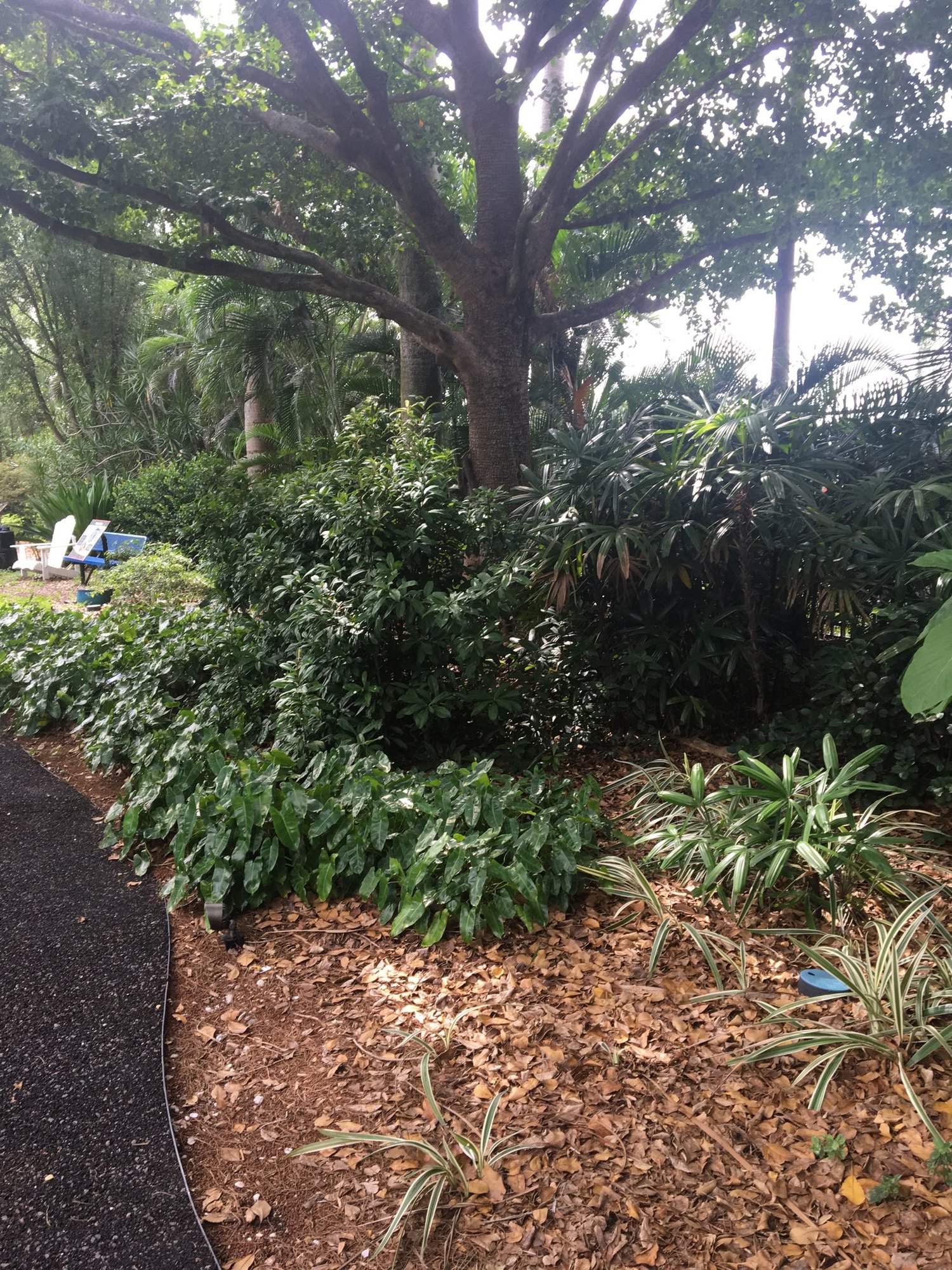
The IMAG History & Science Center is open 10:00 AM to 5:00 PM Monday through Saturday and 12:00 PM to 5:00 PM on Sunday and closed on Tuesday. The IMAG Backyard Nature, at the IMAG History & Science Center, is located at 2000 Cranford Avenue, Fort Myers, Fl 33916. For more information, 239-243-0043 or theIMAG.org.
Since 1993, Florida-Friendly Landscaping™ has served Florida as a partnership between the University of Florida, Institute of Food and Agricultural Sciences Extension (UF/IFAS Extension) and the Florida Department of Environmental Protection (DEP). For more information, plant lists, apps, and brochures, contact. https://ffl.ifas.ufl.edu. Florida-Friendly Landscaping is a trademark program of the University of Florida IFAS Extension.
PHOTO CREDIT: IMAG HISTORY & SCIENCE CENTER
Love what you're reading?
Get the best of Fort Myers delivered to your inbox every month — local stories, events, and good news worth sharing.
Subscribe for Free