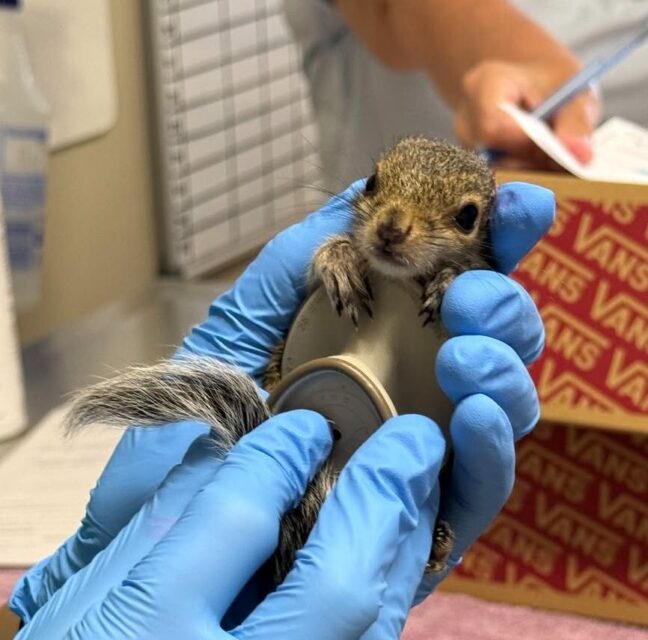


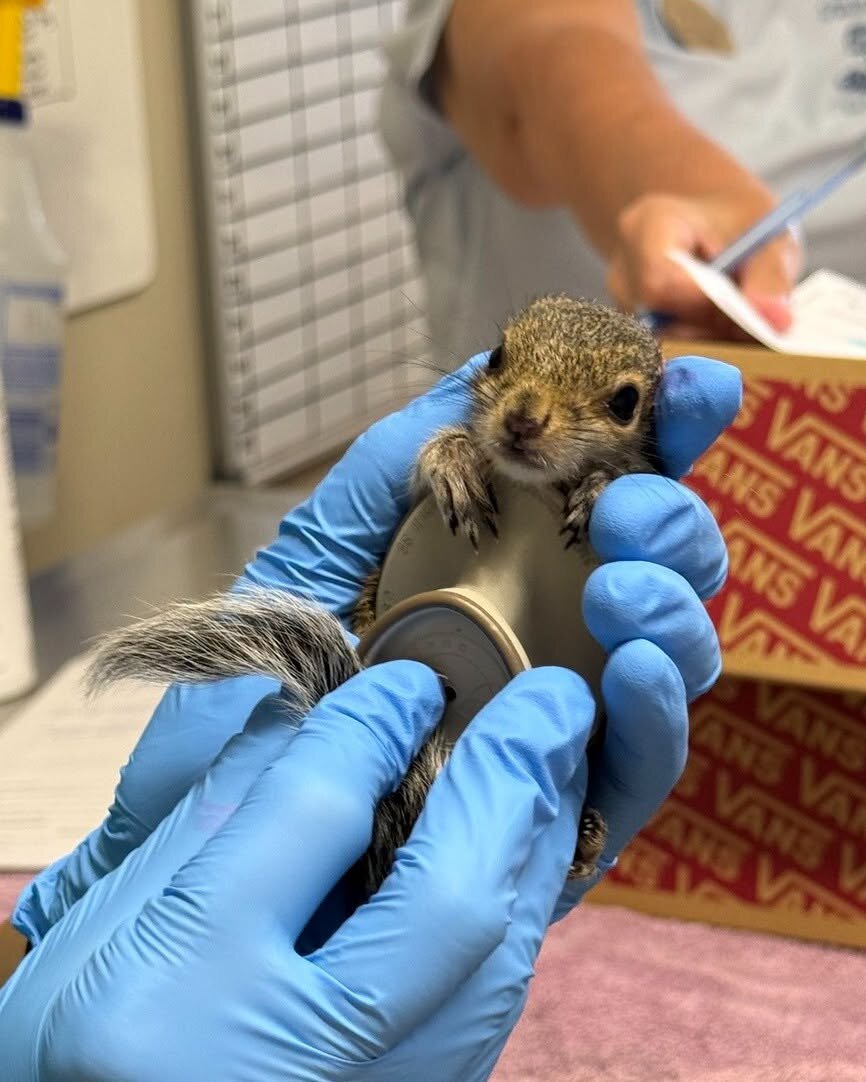
The leaves may not change for fall in Southwest Florida, but there’s another sure sign the season is changing: Baby squirrels.
At the Clinic for the Rehabilitation of Wildlife (CROW) on Sanibel Island, squirrel season is in full swing. In August alone, 67 Eastern gray squirrels were admitted to our wildlife hospital, and more than 30 young squirrels were in our care the day this was written.
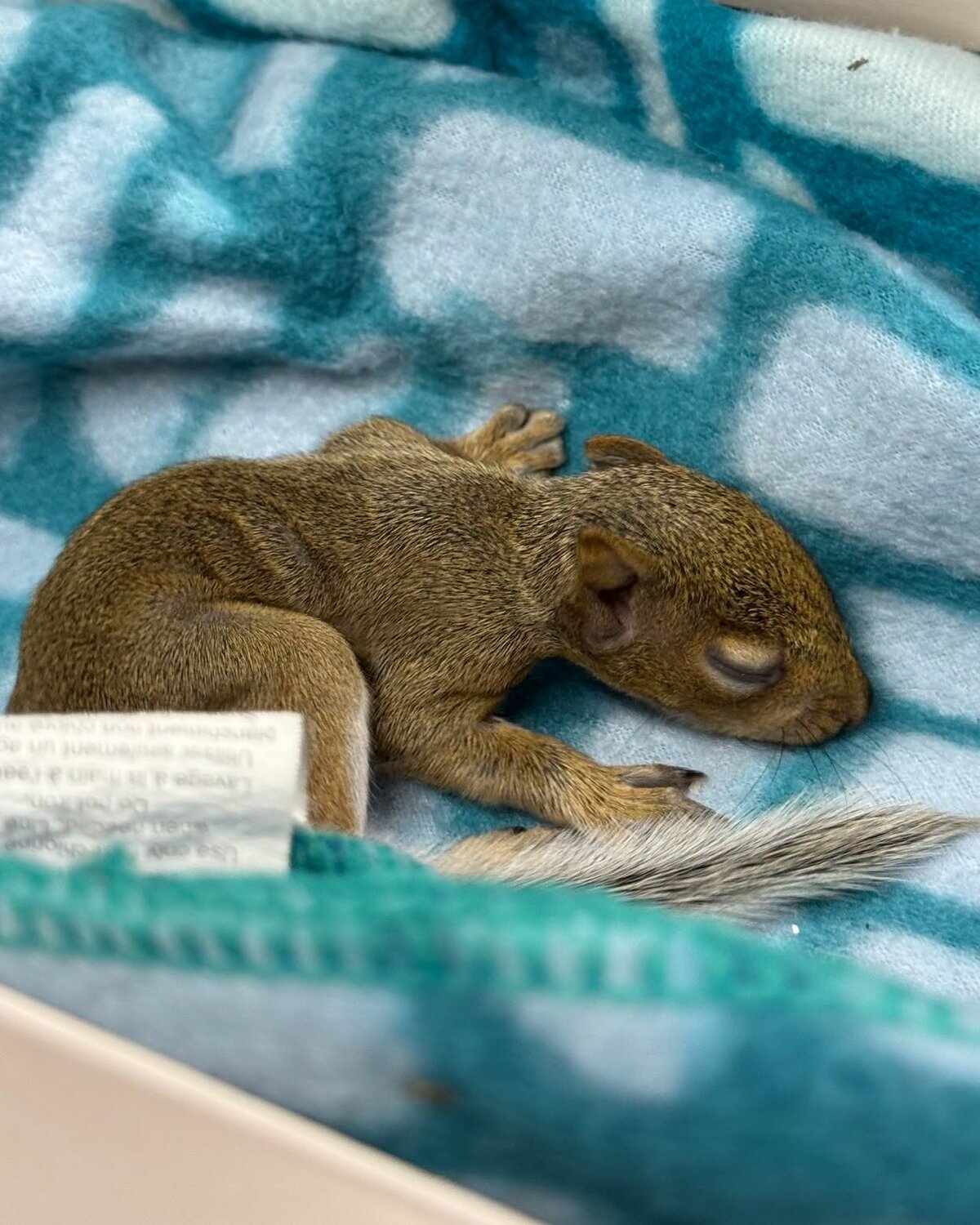
Some arrive with injuries that require veterinary care. Others fall from nests or become separated from their mothers. And during baby season, there’s another situation we work hard to prevent: Healthy young squirrels being “rescued” when they may not need rescuing at all.
We understand the instinct. You find a tiny squirrel alone at the base of a tree, and everything about the situation seems to say, “Help me.”
But before you scoop it up, take a moment to determine whether that help is needed.
BEFORE YOU RESCUE
Wildlife parents are always a baby’s best chance of survival, which is why our first choice for a healthy displaced youngster is to reunite it with its mother whenever possible.
That’s the idea behind CROW’s If You Care, Leave It There program.
Wild parents provide much more than meals. Young animals learn from their own species how to find food, recognize danger and develop the behaviors they’ll need to survive on their own. Even with specialized training and years of experience, wildlife rehabilitators are a young animal’s last hope, not its first.
Eastern gray squirrels are well suited to life in Southwest Florida. They can use tree cavities or build leafy nests, called dreys, high in branches. They may also find sheltered nesting spots in palms and can maintain more than one nest, giving mom options if she needs to move her young.
That flexibility comes in handy when a baby unexpectedly ends up on the ground.
GIVE MOM A CHANCE
Mother squirrels are attentive parents and can retrieve babies that have fallen from their nests. Even if the youngster isn’t old enough to climb on its own, mom can pick it up and carry it back to the nest or relocate it to another one.
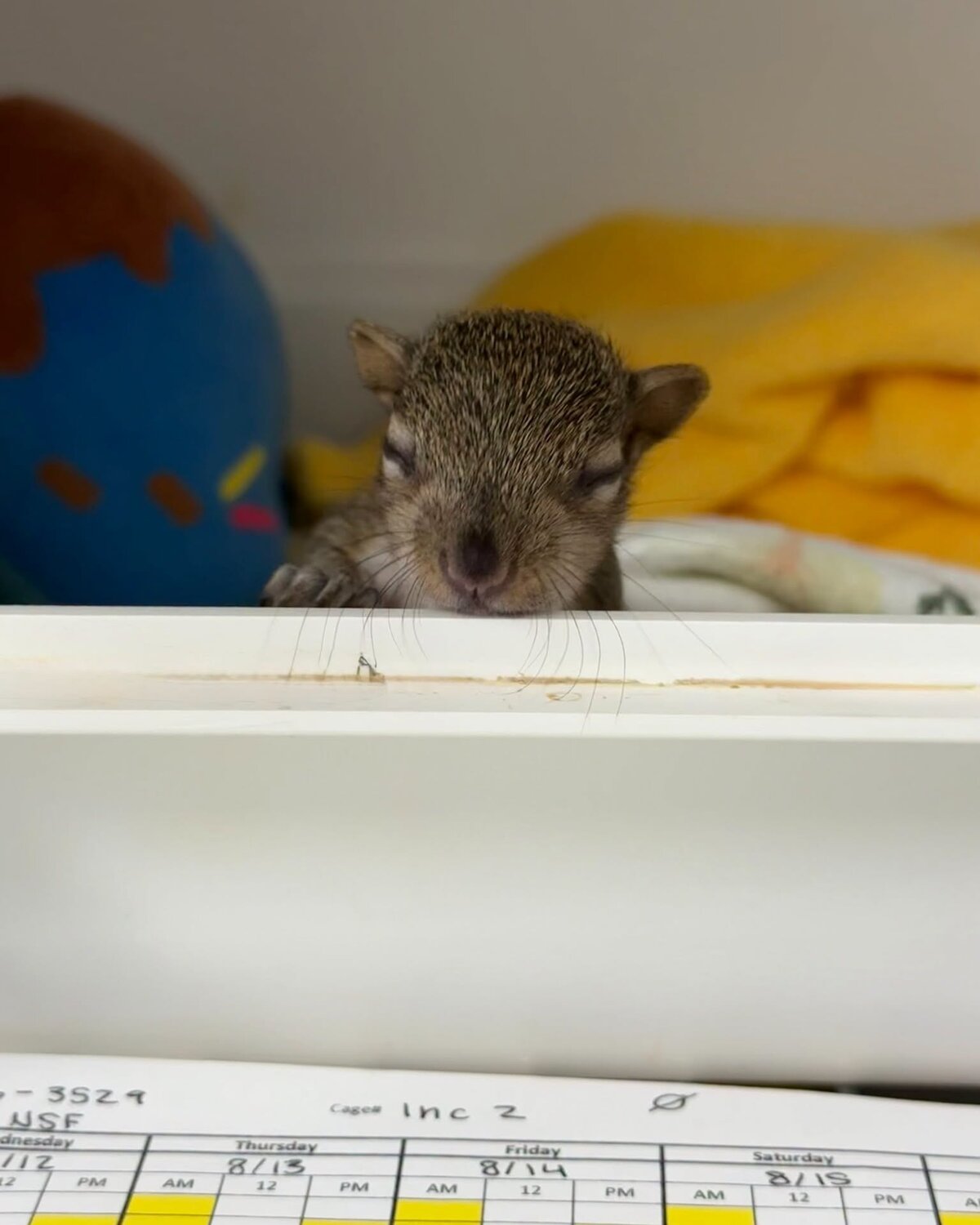
Watch from a distance and keep children and pets away. Mom may be closer than you think but unwilling to approach while people are gathered around her baby. Give her some space and up to four hours to return.
If she doesn’t come back, call CROW at 239-472-3644 ext. 222.
There are also other situations when you shouldn’t wait. If a squirrel is injured, cold or lethargic, or has been caught by a cat or dog, call CROW for guidance.
And if you simply aren’t sure, call us. You don’t have to decide on your own whether an animal needs to be rescued.
CROW has been saving wildlife since 1968.
A quick phone call can sometimes prevent an accidental “abduction” — when a healthy young animal is removed from the wild even though its parent is still nearby. What looks like an orphan may simply have a mother who is out finding food or waiting for the coast to clear before returning.
LOOK UP BEFORE YOU TRIM
Baby squirrel season is also a good time to look up before tackling that next landscaping project.
Tree trimming, removing branches or cutting down a palm can sometimes uncover a squirrel family you didn’t know was there. Before beginning tree work, take a few minutes to look for an active nest. If you discover one, delaying the work when possible, can prevent healthy babies from becoming wildlife patients.
And if a nest or nesting tree has already come down, don’t assume the babies have to come to CROW.
Depending on the situation, there may still be an opportunity to reunite the family. A replacement cavity or nest box can sometimes give mom a safe place to continue caring for her young. CROW can provide guidance so healthy babies can remain with their mother rather than coming into the wildlife hospital.
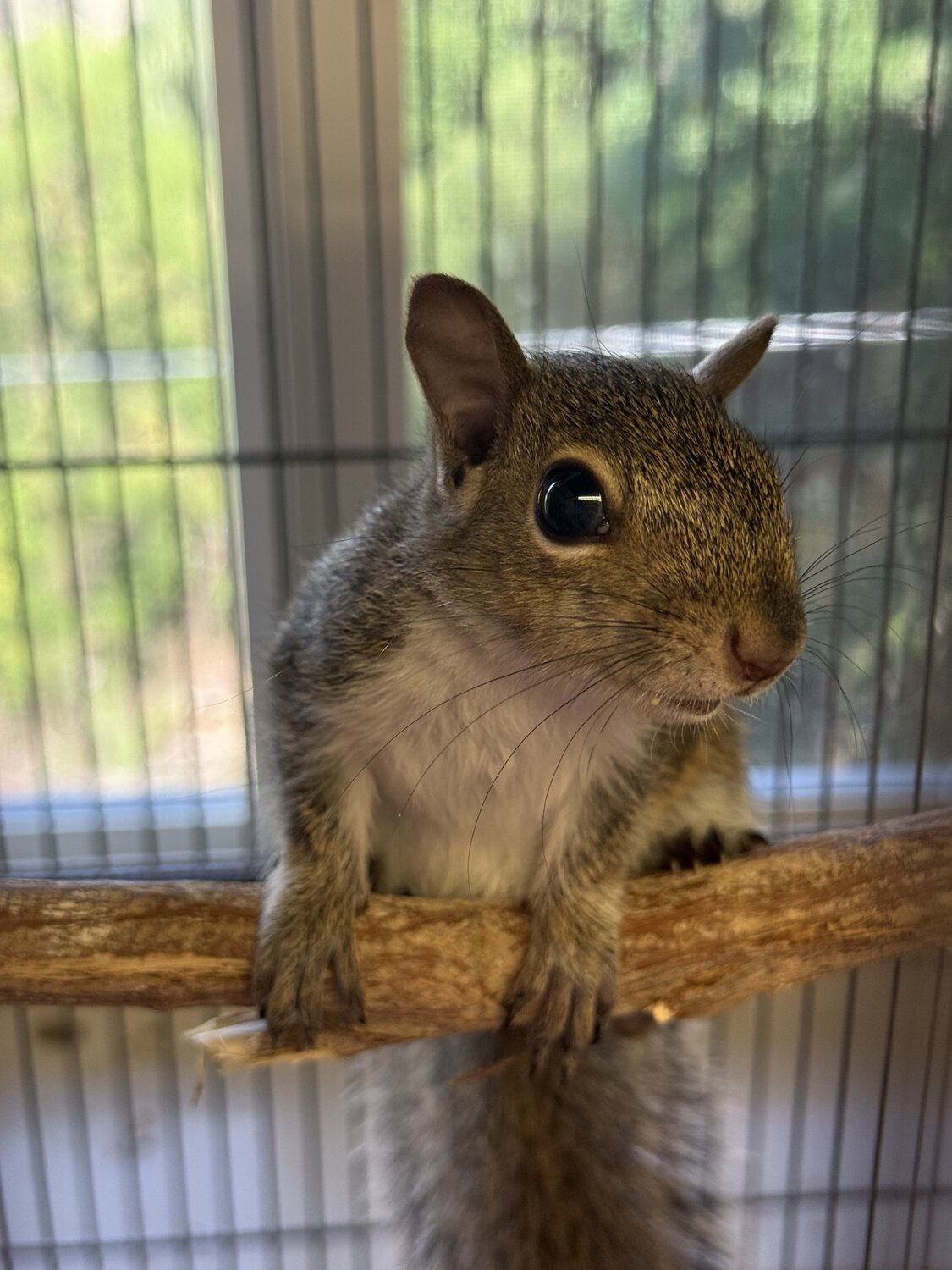
For us, successful reunification is just as much of a wildlife success story as a release.
GROWING UP AT CROW
Of course, sometimes a squirrel truly does need us.
Right now, more than 30 young Eastern gray squirrels are growing up in CROW’s care. And as anyone who has watched a squirrel race across a tree branch can imagine, they don’t stay tiny — or still — for long.
For the youngest patients, much of the day revolves around feeding. Each baby squirrel has its own feeding schedule based on its individual needs.
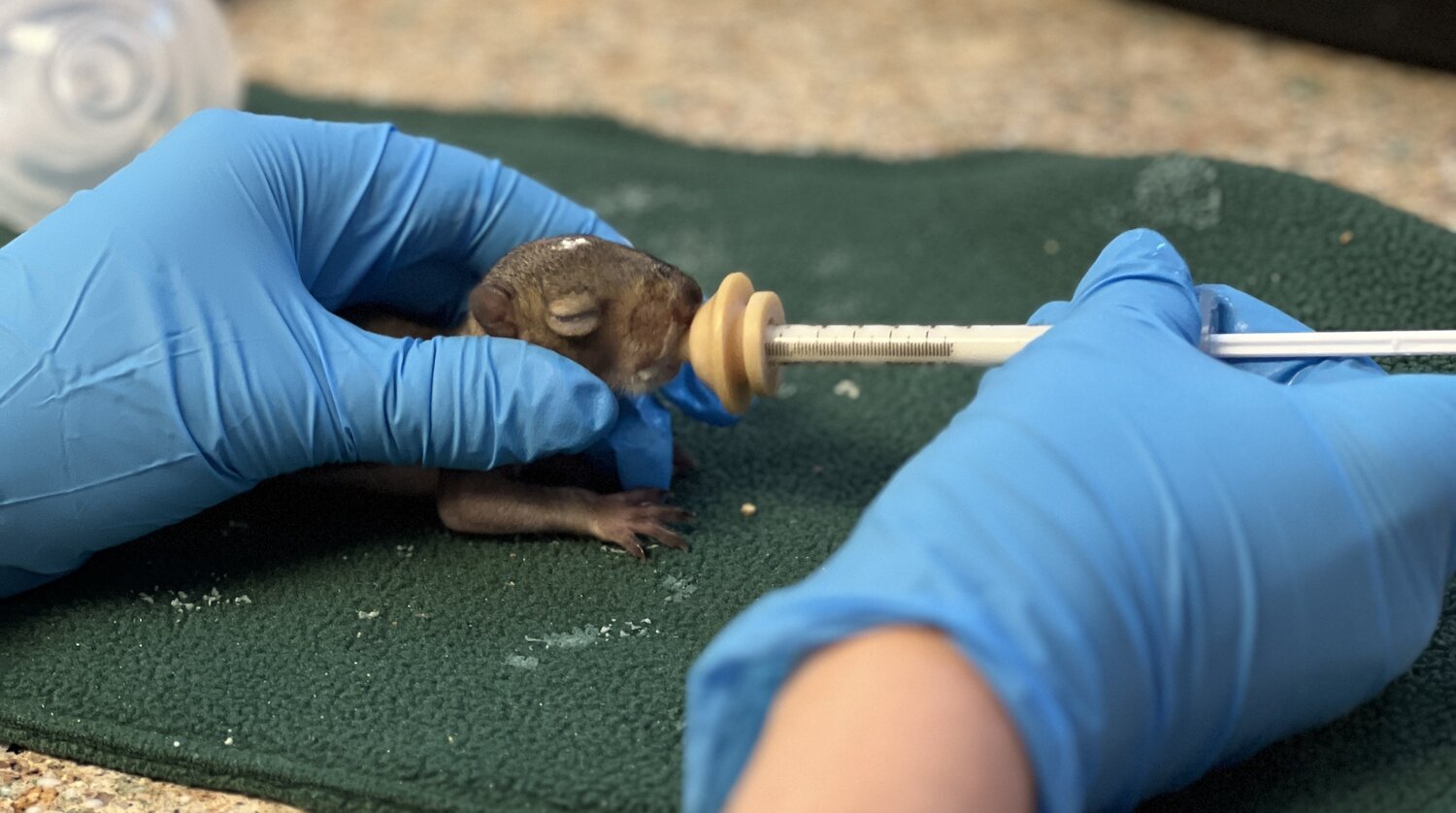
As they grow, their care changes with them. They become more independent, their diets change and they move into larger spaces that give them room to climb, explore and burn off some of that famous squirrel energy.
Enrichment is also an important part of rehabilitation. It gives growing squirrels opportunities to practice natural behaviors and develop the strength, coordination and instincts they’ll need when they return to the wild.
Our goal isn’t to raise squirrels that like us.
It’s to raise squirrels that don’t need us.
IT TAKES A TEAM
Caring for dozens of baby squirrels on individual schedules takes plenty of hands, and CROW’s wildlife rehabilitation team and volunteers are an important part of making it possible.
Under the direction of our wildlife team, trained volunteers help feed our baby squirrels throughout the day, carefully following each patient’s schedule. One feeding may seem small, but multiply it by more than 30 squirrels, several times throughout the day, and those bottles add up quickly.
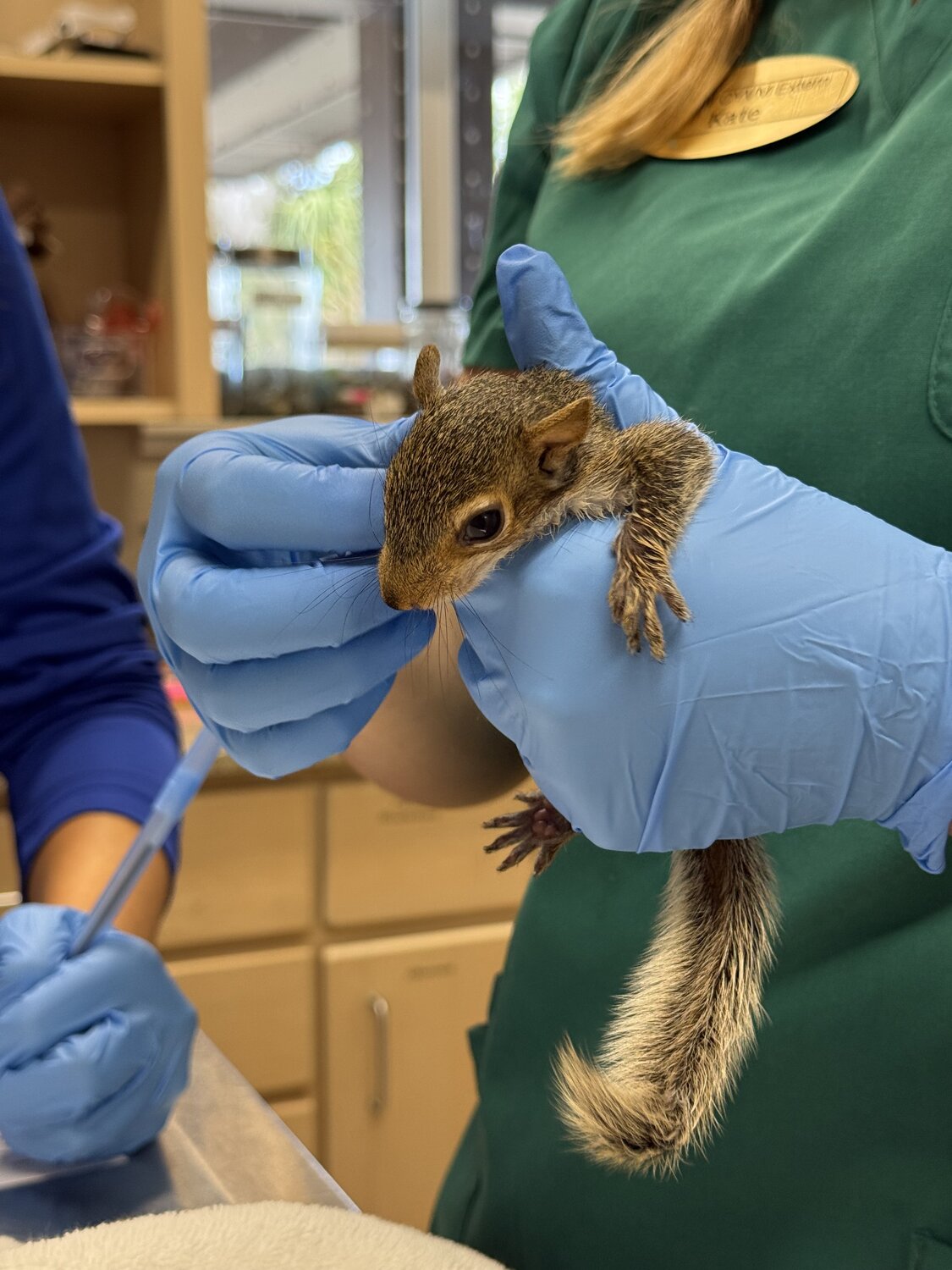
And squirrels aren’t the only babies needing attention.
Our two baby seasons are some of the busiest times of year at CROW, with young animals of many species arriving at the wildlife hospital. Our volunteers help our team keep up with the many daily tasks that go into caring for wildlife and prepare patients for their eventual return to the wild.
That return is always what we’re working toward.
Even while volunteers and staff are providing around-the-clock care, interaction with young wildlife has to be purposeful. Young animals raised improperly can become habituated to people or imprint, which can make release difficult or impossible. Each species also has specialized nutritional, developmental and behavioral needs, which is why wildlife rehabilitation requires trained, licensed professionals.
It’s also why we ask people not to feed a baby squirrel they find.
Offering food or water may feel like the first thing you should do for a hungry-looking youngster, but the wrong food or feeding method can cause serious problems. Call CROW first and let our wildlife team help determine the safest next step.
If a squirrel or another animal does need to be transported to CROW at 3883 Sanibel Captiva Road on Sanibel Island, our hospital is open 8 a.m. to 5 p.m. daily. Can’t get to Sanibel? We have veterinary partners in Cape Coral, Lehigh Acres, and Fort Myers. Our volunteers will go to our partners and transport the animals for you. You can see the locations here: https://crowclinic.org/found-animal.
LEND A PAW THIS SQUIRREL SEASON
Having many baby squirrel admissions in August and September also means going through plenty of supplies. (As of Sept. 8, we had 8 more squirrels in our care!)
Those looking for another way to help can support CROW’s wildlife hospital through our Amazon and Chewy wish lists on our website crowclinic.org. The lists include supplies that help our team care for wildlife throughout the year (not just squirrels). During busy baby seasons, those everyday items can go quickly.
But one of the easiest ways to help wildlife this squirrel season doesn’t require buying a thing.
Check trees and palms before trimming. Keep pets away while a healthy baby waits for mom. Don’t attempt to feed young wildlife yourself. Give a mother squirrel the time and space she needs to retrieve her youngster.
You also can volunteer at CROW.
In any case, when you’re not sure what to do when you see wild animals that may need help, make the call to CROW.
CROW is here as a resource for our community. You don’t need to know whether an animal needs to come to the wildlife hospital before contacting us. We can help you determine what you’re seeing and what to do next.
So, if you happen to find one of Southwest Florida’s smallest signs of fall at the bottom of a tree this squirrel season, don’t automatically assume it has been abandoned. Look for signs of injury, give mom some time and space and call CROW if you have questions.
Sometimes a rescue is exactly what a baby squirrel needs.
Sometimes the best rescue is the one we never have to make.
Love what you're reading?
Get the best of Fort Myers delivered to your inbox every month — local stories, events, and good news worth sharing.
Subscribe for Free