

FEBRUARY ON THE WATER
The transition from winter season often changes early in Southwest Florida. Spring will not officially arrive until mid-March, however on the water we are generally appreciating the change of seasons by early to mid-February.
Lack of rain through the winter months plus cool water temperatures give us the clearest water of the year. Yes, it may still get stirred up after a windy day or two, but the clarity returns quickly. Also, there are many days with negative low tides, this combination is my favorite time to explore new fishing grounds on a bright and sunny day.
My best word of advice is if you go exploring, do it at the end of a falling tide and plan to use the rising water to explore new areas. Unless you are a seasoned boater and know the local waters and your boat’s limitations, take it slow. If you get too shallow and begin to ground your boat, you should be able to push it off or the rising water will have you floating soon.
If you take the time to learn an area of water and your boat’s limitations during these lower tides, the rest of the year should be a breeze. It’s always better to explore over sunny days and polarized sunglasses are a must to cut down glare on the water’s surface. This is also a great month for kayak and canoe anglers to take advantage of the lower tides and get to places most boats cannot.
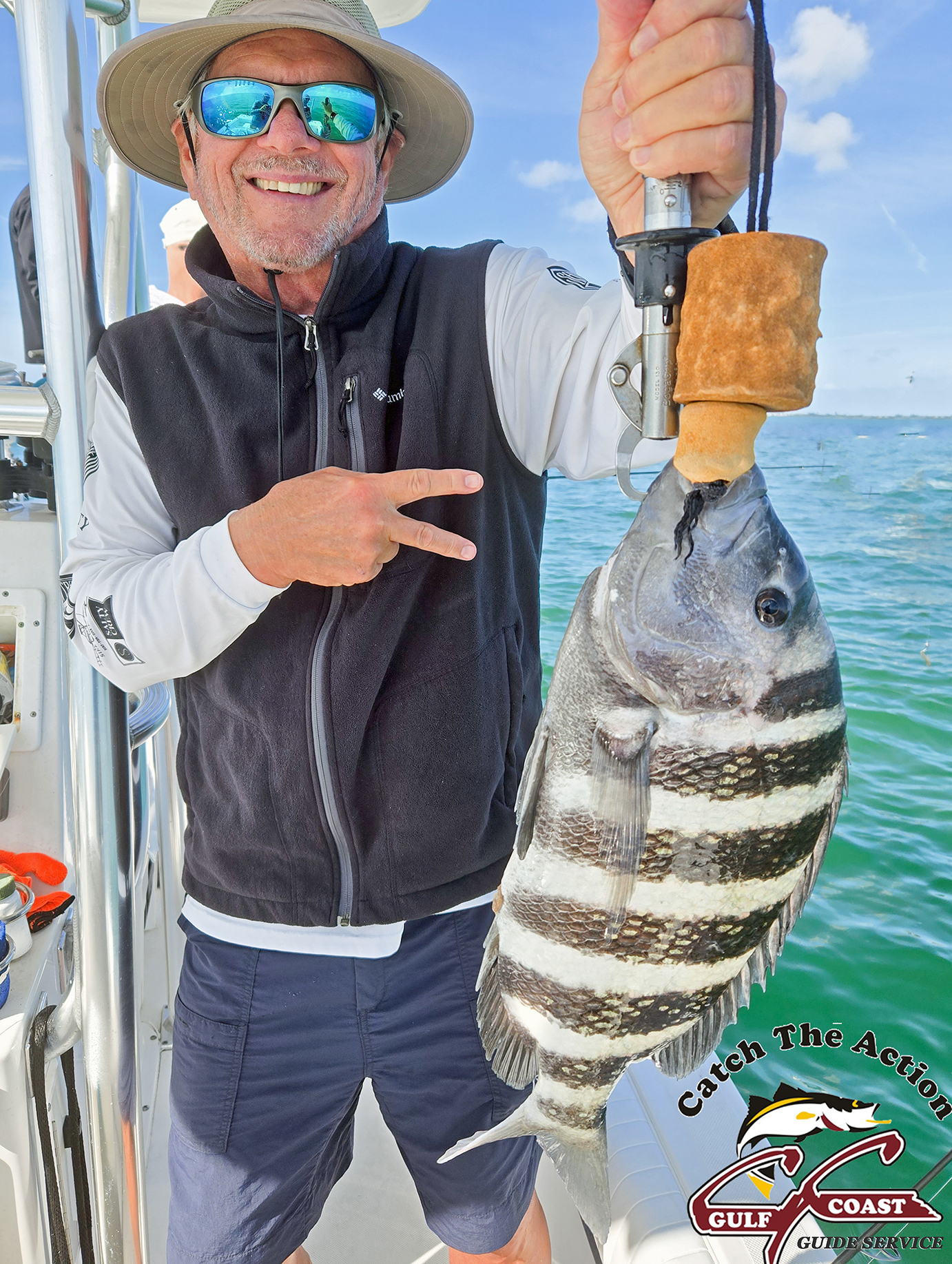
For fishing, we can expect a mix of winter and spring conditions, and possibly the best of both. Sheepsheads are in their winter spawn, with big fish schooling near the gulf passes, beaches, and nearshore reefs. Shrimp is the preferred bait, along with sheepsheads; you can hook black and red drum, pompano, flounder, and other tasty bottom dwellers.
For many of us, as the water warms into the 70s, we are back to live bait fishing. This means getting on the water early as the sun comes up, chumming the flats, and throwing a cast net. False pilchards or scaled sardines is our target. With a live well of fresh caught frisky baits, good things can open.
Just as bait moves in with the warming water, the larger fish also show up. What and where really depends on water temperature. Large sea trout are often the first to arrive around inshore waters followed by redfish and snook. Spanish mackerel and bluefish follow the bait inshore and are often running in schools. Sharks and cobia also make an appearance. If mild, it’s possible for the first tarpon schools of the season to arrive in gulf waters a short distance off the beaches.
Bottom fishing nearshore reefs can yield a mixed bag of many species that may include sheepsheads, snapper, grunts, pompano, permit, grouper, and others. Cobia, barracuda, sharks, king and Spanish mackerel are prowling nearshore waters as well.
February is one of the busiest months in Southwest Florida with traffic congestion and crowds everywhere. On the water it’s less hectic and way more relaxing. Given the choice of a day fighting the crowds or on the water fighting fish is an easy pick. I believe most would choose a relaxed day on the water every time. Get out there and enjoy our great outdoors!
For charter information, please contact us at Gulf Coast Guide Service and “Catch the Action” with Capt. Bill Russell, call or text (239) 410-8576, website: http://www.fishpineisland.com, email: [email protected].
Capt. Bill Russell is a native and lifelong resident of Pine Island who has spent his entire life fishing the waters surrounding Pine Island and Southwest Florida. For the past 30 years, Bill has been a professional fishing guide who takes pride in customizing each trip to ensure everyone on board has a great time and will return again. Come join us and “Catch the Action.”